 Texas Injury Lawyers Blog


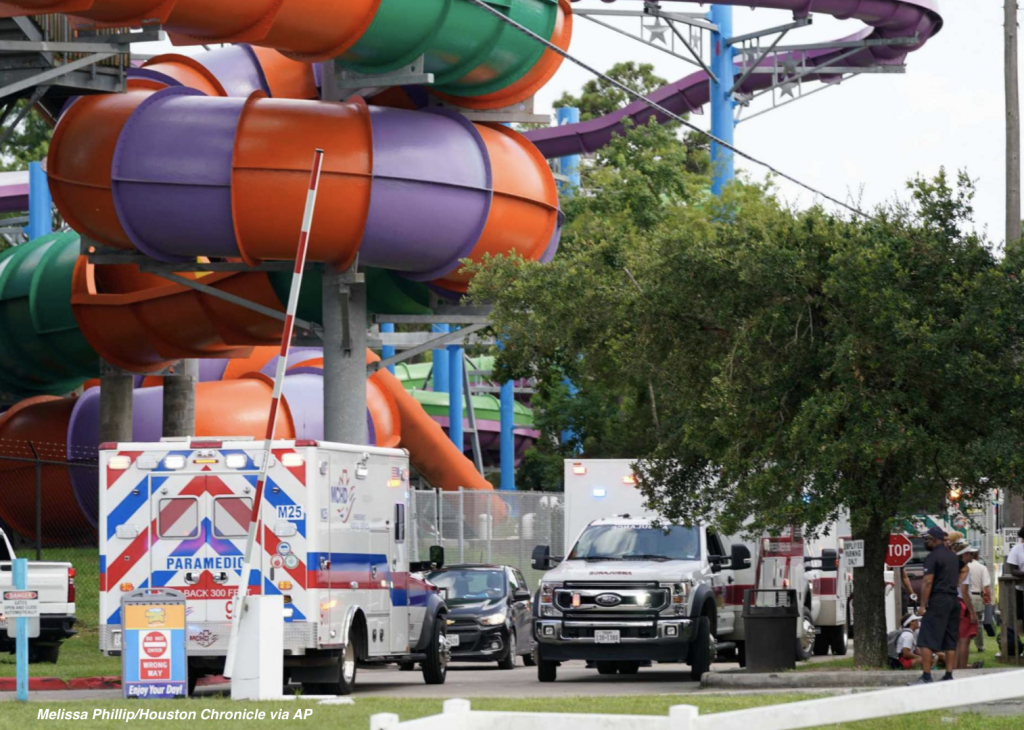 Texas’ year-round warm climate combined with vast open spaces make the state home to an array of theme parks, amusement parks, and outdoor recreational parks. While these locations are a great place for couples and families to spend a day together, they also pose many risks to park-goers and employees. While serious injuries at a Texas amusement park are uncommon, they occur and can result in lifelong consequences.
For example, The New York Times recently reported on chemical exposure at a Texas amusement park. In late July, 26 people suffered exposure to bleach and sulfuric acid at a Six Flags amusement park. Park officials became aware of the incident when nearly 60 people began experiencing burning and breathing problems while in the shallow end of a children’s pool. Authorities evacuated the park and had the affected individuals wash their eyes under the fire truck’s hose. However, nearly half of the individuals were taken to the hospital, and one person remains in critical condition.
The children’s pool should maintain a pH balance of 7. However, testing revealed that the pool contained a combination of 35 percent sulfuric acid and approximately 12 percent bleach. While investigators do not believe the contamination was intentional, they are unsure how the event occurred. The chemicals found in the pool are the typical chemicals that the park uses every day to clean and sanitize the pool. However, they are investigating the system that injects the chemicals to determine whether the system malfunctioned. Safety logs indicated that safety officials inspected the park about three weeks before the incident. A County Judge closed down the park until the investigation is complete. Further, the Judge indicated that the park should have been recording the pH balance levels; however, they have yet to discover whether that log exists.
 The Supreme Court of Texas recently issued an
  The Supreme Court of Texas recently issued a
  Many Texas companies hire independent contractors because of their cost-effective nature. With an independent contractor, companies can use the contractor for a particular project when it needs to be done and are free from being tethered to the particular contractor when the work is complete. When a contractor’s actions cause an accident, however, there is a question of liability on the company’s part. Is the contractor or the company responsible? It can often be a complicated question.
 Recently, a Texas district court issued an
  Many Texans spend the majority of their time at work. As a result, San Antonio
  Under Texas premises liability law, restaurants and bars have a duty to protect their customers. However, the extent of this duty is often called into question in cases where someone is injured while visiting an eating or drinking establishment. In a recent
  Shooting ranges are popular in Texas, but anytime someone handles a gun there is a risk for injury. Despite the safety procedures in place in most Texas ranges, accidents do occur, and individuals are sometimes shot, leading to injuries or even death. Like most accidents, Texas law allows victims to file a civil negligence suit to recover for their injuries against a negligent party who caused the accident. However, the requirements for filing a lawsuit against a shooting range are a bit more complicated, meaning some plaintiffs who misunderstand the statutory requirements for filing may have their suit dismissed regardless of its merits.